Contents
Measure Details
Percentage of patients 18-75 years of age with diabetes and an active diagnosis of retinopathy in any part of the measurement period who had a retinal or dilated eye exam by an eye care professional during the measurement period or diabetics with no diagnosis of retinopathy in any part of the measurement period who had a retinal or dilated eye exam by an eye care professional during the measurement period or in the 12 months prior to the measurement period
Measure Parameters
Patients with an eye screening for diabetic retinal disease. This includes diabetics who had one of the following:
- Diabetic with a diagnosis of retinopathy that overlaps the measurement period and a retinal or dilated eye exam by an eye care professional in the measurement period
- Diabetic with no diagnosis of retinopathy overlapping the measurement period and a retinal or dilated eye exam by an eye care professional in the measurement period or the year prior to the measurement period
Denominator
Patients 18-75 years of age by the end of the measurement period with diabetes with a visit during the measurement period.
- Exclude patients who are in hospice care for any part of the measurement period.
- Exclude patients receiving palliative care for any part of the measurement period.
- Exclude patients 66 and older by the end of the measurement period who are living a nursing home any time on or before the end of the measurement period.
- Exclude patients who have bilateral absence of eyes any time during the patient’s history through the end of the measurement period.
- Exclude patients 66 and older by the end of the measurement period with an indication of frailty for any part of the measurement period who also meet any of the following advanced illness criteria:
- Advanced illness diagnosis during the measurement period or the year prior
- OR taking dementia medications during the measurement period or the year prior
Elation Workflows
ℹ️ NOTE
Elation has implemented dedicated workflows that reflect standardized requirements we do not control for certification to ensure structured and reportable tracking of measure specifications for supported electronic Clinical Quality Measures. To optimize performance per the specifications, please adhere precisely to the workflows outlined in the referenced Help Center article.
Patients must have an active diagnosis of diabetes recorded in their chart during the measurement period. Elation looks for a diabetes ICD-10 code in either a visit note for the measurement period or in the Problem List.
To add a diabetes diagnosis to the Problem List:
| 1 | Go to the Problem List and click + Add Problem. |
| 2 | Search for the appropriate diabetes diagnosis and then select it from the results. |
| 3 | Adjust the Title and Dx Date as needed. |
| 4 | Click Save. |

| 1 |
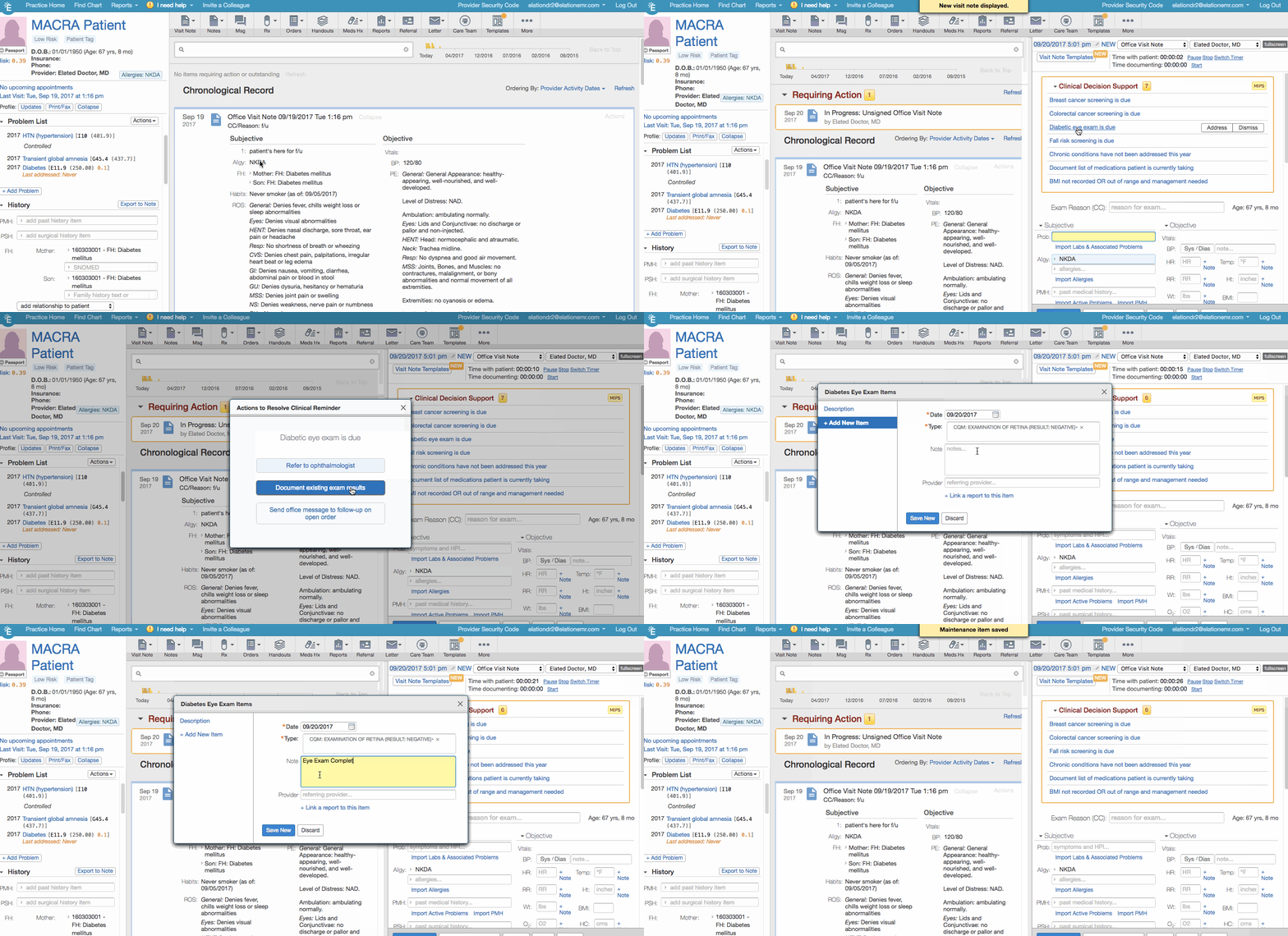
Click Address in the Diabetic Eye Exam is due reminder at the top of the visit note draft.
|
| 2a |
To meet the numerator requirements immediately by documenting a diabetic eye exam for the patient:
- Click Document existing exam results.
- Record the eye exam and results:
- Enter the date of the eye exam in the Date field.
- Select one of the appropriate document tags below in the Type field:
- Eye Exam (negative for retinopathy)
- Eye Exam (positive for retinopathy)
- Click + Link a report to this item to link the eye exam report in the patient's chart to the record if available.
- Click Save New.
|
| 2b |
To move closer to meeting the numerator requirements:
- Click Refer to ophthalmologist to create a referral order for the patient.
- Click Send office message to follow-up on open order to have staff follow up on an outstanding referral.
Once the eye exam is completed and you have the results, return to Step 2a.
|
Clicking Dismiss will dismiss the reminder and the reminder will not appear again until a new visit note draft is opened.
| 1 | Click on Diabetic Eye Exam in the Health Maintenance section of the Clinical Profile. |
| 2 | Enter the date of the eye exam in the Date field. |
| 3 |
Select one of the appropriate document tags below in the Type field:
- Eye Exam (negative for retinopathy)
- Eye Exam (positive for retinopathy)
|
| 4 |
Click + Link a report to this item to link the eye exam report in the patient's chart to the record if available.
|
| 5 |
Click Save New.
|

| 1 | Open the eye exam report in the patient's chart. |
| 2 | Click Actions -> Edit Details. |
| 3 |
Go to the Tags field and select one of the appropriate document tags below:
- Eye Exam (negative for retinopathy)
- Eye Exam (positive for retinopathy)
|
| 4 | Click Save. |
Click here for more details about Document Tags.
| Exclusion/Exception | Steps |
|
Patients whose hospice care overlaps the measurement period.
|
Click + Tag at the bottom of the visit note draft and add the appropriate document tag from the list below:
- EXCLUSION: HOSPICE CARE
- EXCLUSION: IP DISCHARGE STATUS TO HEALTH CARE FACILITY FOR HOSPICE CARE
- EXCLUSION: IP DISCHARGE STATUS TO HOME FOR HOSPICE CARE
|
| Patients receiving palliative care for any part of the measurement period. | Click + Tag at the bottom of the visit note draft and add the following document tag - EXCLUSION: PALLIATIVE CARE. |
| Patients 66 and older by the end of the measurement period who are living long term in a nursing home any time on or before the end of the measurement period. | Click + Tag at the bottom of the visit note draft and add
the following document tag - EXCLUSION: Living Long Term in a Nursing Home.
|
|
Exclude patients who have bilateral absence of eyes any time during the patient’s history through the end of the measurement period.
|
Add the problem Anophthalmos of both eyes (Q11.1) in the patient’s Problem List or visit note with a start date prior to December 31, 2026. |
|
Exclude patients 66 and older by the end of the measurement period with an indication of frailty for any part of the measurement period who also meet any of the following advanced illness criteria:
- Advanced illness diagnosis during the measurement period or the year prior
- OR taking dementia medications during the measurement period or the year prior
| See below. |
Documenting frailty
To document frailty in Elation using
- Frailty diagnosis, advanced illness codes and/or medications
- Add a frailty diagnosis to the Problem List. You must select from one of the frailty codes listed here.
- Record one of the following:
- an advanced illness diagnosis in 2 outpatient encounters using one of the codes listed here.
- an advanced illness in 1 inpatient counter using one of the codes listed here.
- a dementia medication in the patient's chart.
- A frailty device code
- Click + Tag at the bottom of the visit note draft.
- Create/add the appropriate document tag for the relevant frailty device from this list of frailty device codes.
- If you are creating the document tag for the first time for a frailty device, make sure the document tag has the device's HCPCS code listed.
Measure Information
Diabetes is the seventh leading cause of death in the United States. In 2017, diabetes affected approximately 34 million Americans (10.5 percent of the U.S. population) and killed approximately 84,000 people (Centers for Disease Control and Prevention [CDC], 2020a). Diabetes is a long-lasting disease marked by high blood glucose levels, resulting from the body's inability to produce or use insulin properly (CDC, 2020b). People with diabetes are at increased risk of serious health complications including vision loss, heart disease, stroke, kidney damage, and amputation of feet or legs, and premature death (CDC, 2018).
In 2017, diabetes cost the U.S. an estimated $327 billion: $237 billion in direct medical costs and $90 billion in reduced productivity. This is a 34 percent increase from the estimated $245 billion spent on diabetes in 2012 (American Diabetes Association, 2018).
Diabetic retinopathy is progressive damage to the small blood vessels in the retina that may result in loss of vision. It is the leading cause of blindness in adults between 20-74 years of age. Approximately 4.1 million adults are affected by diabetic retinopathy (CDC, 2020c).
Reference: Measure Information from CMS
Attachments
Related Articles